CMDA Technical Methodology - Project Components

This methodology proceeds from a Transboundary Diagnostic Analysis (TDA) to a Strategic Action Programme (SAP). The TDA provides the joint scientific and policy diagnosis of priority issues, while the SAP sets out ministerially endorsed solutions. Complementary components on cooperation, policy reform, and capacity building ensure that these processes are embedded in durable governance frameworks.
Project Area and Geology
The Cambodia–Mekong River Delta Aquifer system extends beneath Cambodia’s Mekong floodplain and the delta in southern Viet Nam.
  • The aquifer consists of Quaternary alluvial deposits and deeper Tertiary sedimentary formations, which together act as major transboundary groundwater reservoirs.
  • It supports domestic water supply for millions of people, irrigated agriculture in one of the world’s most productive deltas, and wetlands of international significance.
  • Groundwater is particularly critical in rural Cambodia, where piped supply coverage remains limited and dependence on wells is high.

Main Issues and Pressures
  • Over-abstraction and groundwater mining: Viet Nam’s delta provinces pump an estimated 2.5–3 million cubic meter/day, exceeding recharge in many locations. Cambodia’s abstraction is lower in volume but often unmanaged, with little licensing or control.
  • Land subsidence: Linked to groundwater extraction in the delta, with rates of 2–4 cm per year recorded in urban and peri-urban areas. This exacerbates flood risk and damages infrastructure.
  • Saline intrusion: Accelerated by reduced river flows, sea level rise, and declining groundwater levels. Salinity now penetrates tens of kilometers inland in the dry season.
  • Water quality degradation: Arsenic and iron contamination in shallow aquifers, especially in Cambodia, pose risks to drinking water safety. Agricultural and industrial pollution add further pressure.
  • Data and monitoring gaps: Viet Nam has several hundred observation wells, while Cambodia operates fewer than 20, limiting its ability to track groundwater levels or quality.
  • Institutional asymmetry: Viet Nam’s Department of Water Resources Management maintains structured groundwater management policies, while Cambodia’s frameworks remain at an earlier stage of development, creating challenges for harmonization.

These issues underscore the importance of a joint, science-based diagnostic and cooperative management framework.


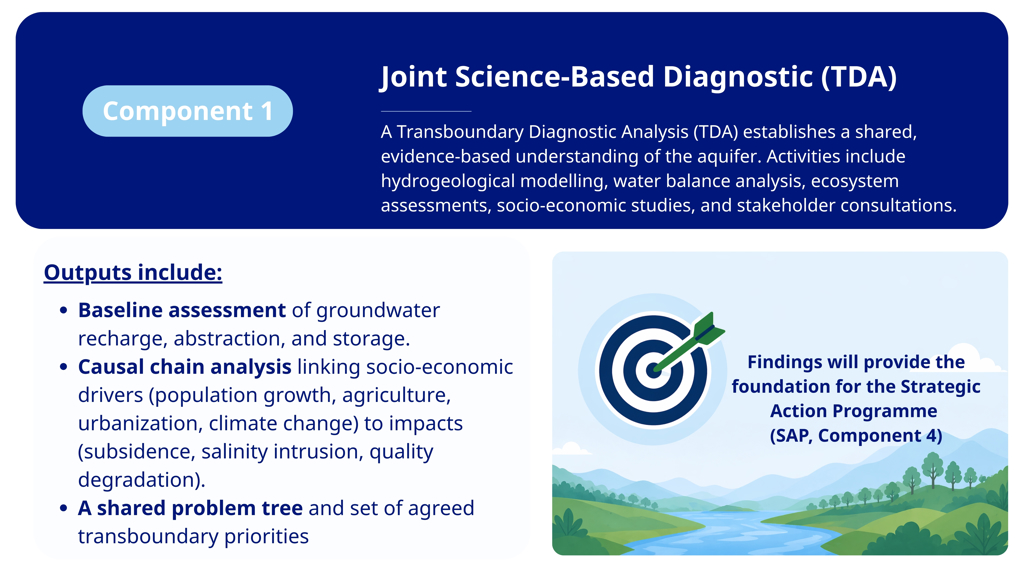
Component 1: Joint Science-Based Diagnostic (TDA)

A Transboundary Diagnostic Analysis (TDA) establishs a shared, evidence-based understanding of the aquifer. Activities include hydrogeological modelling, water balance analysis, ecosystem assessments, and stakeholder consultations.

Outputs include:

  • Baseline assessment of groundwater recharge, abstraction, and storage.
  • Causal chain analysis linking socio-economic drivers (population growth, agriculture, urbanization, climate change) to impacts (subsidence, salinity intrusion, quality degradation).
  • A shared problem tree and set of agreed transboundary priorities.

Findings will provide the foundation for the Strategic Action Programme (SAP, Component 4).


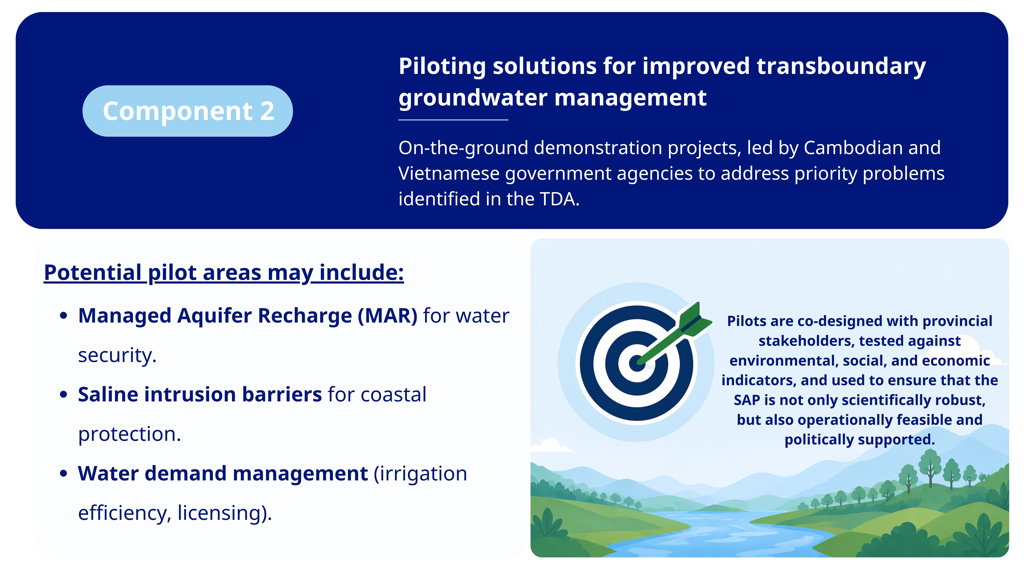
Component 2: Government Pilots

On-the-ground demonstration projects, led by Cambodian and Vietnamese government agencies.

Pilot themes include:

  • Managed Aquifer Recharge (MAR) for water security.
  • Saline intrusion barriers for coastal protection.
  • Water demand management (irrigation efficiency, licensing).

Pilots are co-designed with provincial stakeholders, tested against environmental, social, and economic indicators, and used to ensure that the SAP is not only scientifically robust but also operationally feasible and politically supported.


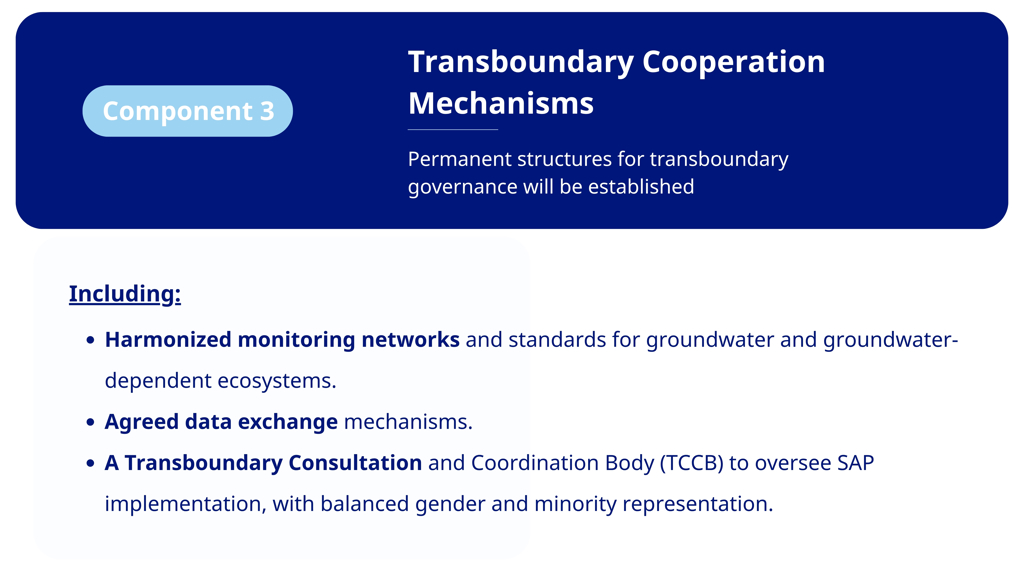
Component 3: Transboundary Cooperation Mechanisms

Permanent structures for binational governance will be established, including:

  • Harmonized monitoring networks and standards for groundwater and ecosystems.
  • Agreed data exchange mechanisms.
  • A Transboundary Consultation and Coordination Body (TCCB) to oversee SAP implementation, with balanced gender and minority representation.

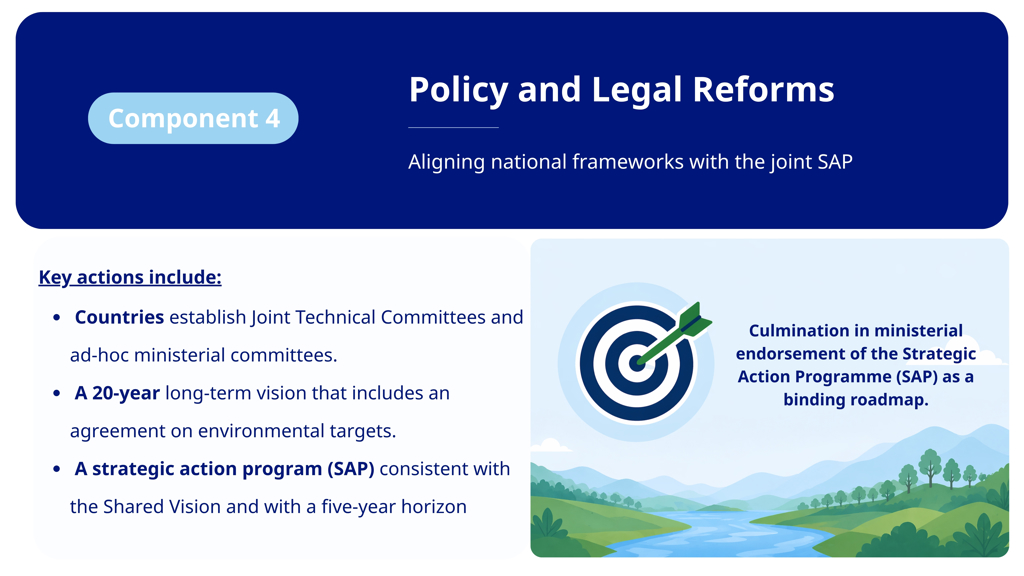
Component 4: Policy and Legal Reforms

Aligning national frameworks with the joint SAP:

  • In Cambodia, supporting enforcement of groundwater licensing and regulatory provisions in the new Environmental Protection and Natural Resources Law.
  • In Viet Nam, strengthening DWRM’s permitting systems and integrating groundwater into basin-level planning.
  • At the regional level, ensuring groundwater is included in Mekong River Commission and ASEAN water cooperation platforms.

It culminates in ministerial endorsement of the Strategic Action Programme (SAP) as a binding roadmap.


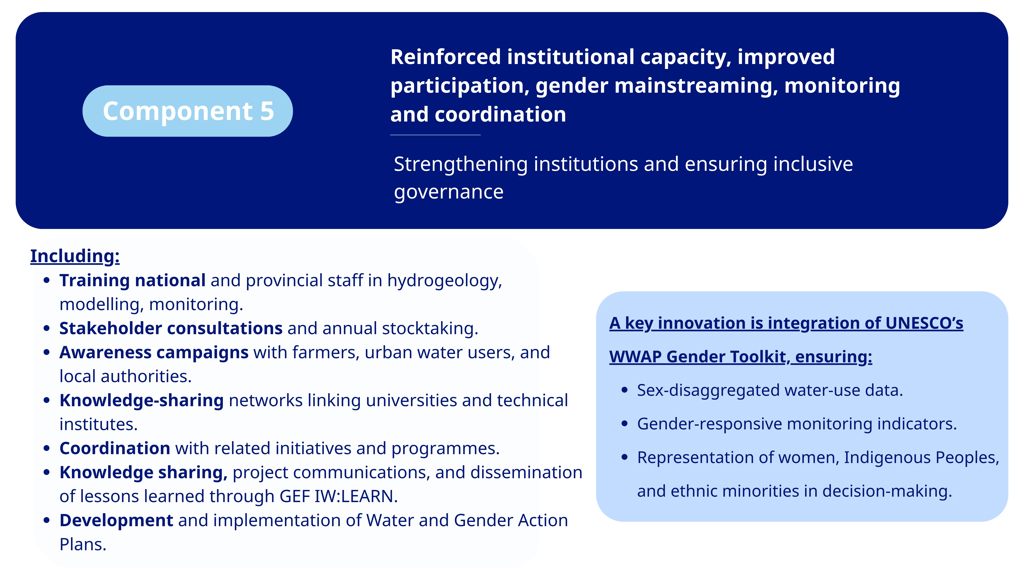
Component 5: Capacity Building, Stakeholder Engagement, and Gender Mainstreaming

Strengthening institutions and ensuring inclusive governance:

  • Training national and provincial staff in hydrogeology, modelling, monitoring.
  • Awareness campaigns with farmers, urban water users, and local authorities.
  • Knowledge-sharing networks linking universities and technical institutes.

A key innovation is integration of UNESCO’s WWAP Gender Toolkit, ensuring:

  • Sex-disaggregated water-use data.
  • Gender-responsive monitoring indicators.
  • Representation of women, Indigenous Peoples, and ethnic minorities in decision-making.

Further Resources on Methodology and Tools