Enhancing Sustainability of the Transboundary Cambodia–Mekong Delta Aquifer (CMDA)
1. Overview
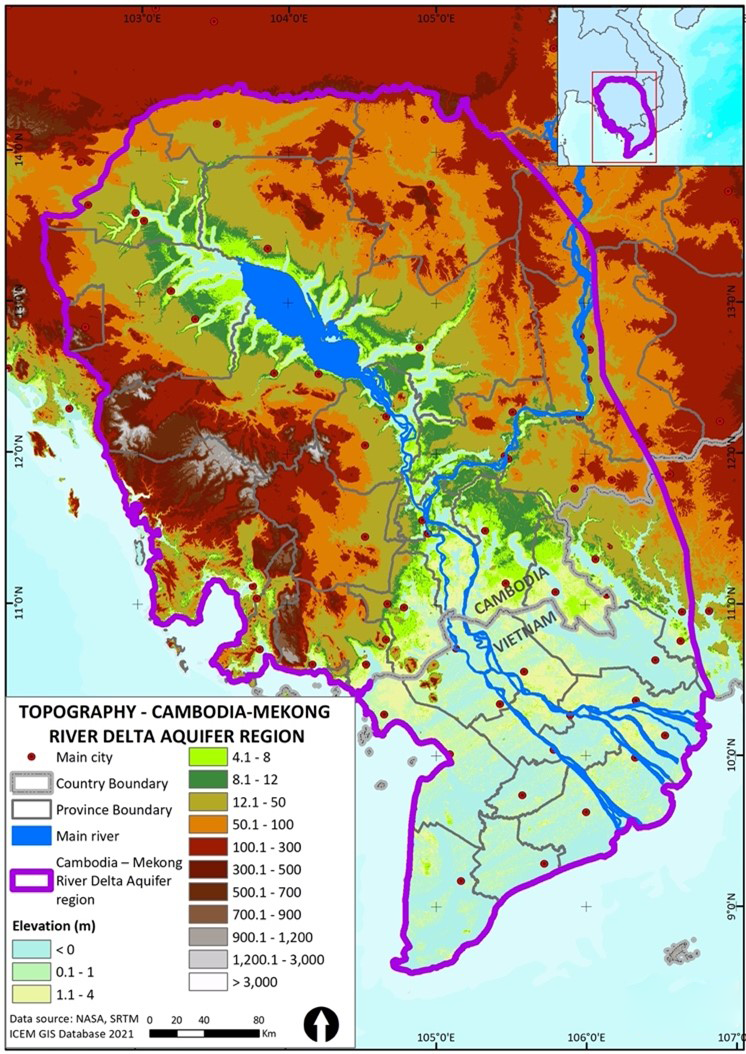
The Cambodia–Mekong River Delta Aquifer (CMDA) is one of the most important shared groundwater systems in Southeast Asia. Lying beneath Cambodia’s floodplains and the Mekong Delta of Viet Nam, the aquifer sustains millions of people with water for drinking, farming, and ecosystems. Yet this hidden resource is under increasing stress from over-extraction, salinity intrusion, and climate change.
The Enhancing the Sustainability of the Transboundary Cambodia-Mekong Delta Aquifer project is the first initiative of its kind in the Lower Mekong Basin. Running from 2024 to 2028, it aims to strengthen the sustainability of this shared aquifer through science-based knowledge, cooperative governance, joint strategic planning, and inclusive participation. The project is funded by the Global Environment Facility (GEF) International Waters (IW) focal area and implemented by the Food and Agriculture Organization of the United Nations (FAO) in partnership with the Governments of Cambodia and Viet Nam, represented respectively by the General Department of Environmental Protection, Ministry of Environment, and the Department of Water Resources Management, Ministry of Agriculture and Environment. IUCN serves as the lead executing agency for the project, with the United Nations Educational, Scientific and Cultural Organization (UNESCO) and the Mekong Region Futures Institute (MERFI) acting as co-executing partners.
2. Our Goal
To strengthen environmental sustainability and water security in the Lower Mekong Basin by focusing, for the first time, on improved governance and sustainable utilization of the Cambodia-Mekong River Delta Transboundary Aquifer.
The CMDA project is designed to deliver both knowledge and cooperation to reach its goal through five interlinked objectives:
- To reach consensus among countries on key transboundary and national concerns affecting the aquifer through joint fact finding, opening pathways to concerted remedial actions.
- To test strategies for improved groundwater recharge, reduced extraction and mitigated ecosystem/livelihoods tradeoffs.
- To improve transboundary cooperation and aquifer transboundary governance.
- To reach commitment among countries on implementingpriority legal, institutional and policy reforms and investments for the protection and equitable utilization of the shared aquifer and its dependent ecosystems.
- To implement project mechanisms for monitoring, improve stakeholder consultation, gender mainstreaming, dissemination, coordination and monitoring progress, and enhance long-term sustainability of achievements.
3. Why Groundwater Matters
Groundwater in the CMDA system is essential for livelihoods, ecosystems, and economic development in both Cambodia and Viet Nam. It provides drinking water for millions of rural and urban households, supports irrigated agriculture in one of the world’s most productive deltas, and sustains wetlands and biodiversity.
But the aquifer is at risk. Unsustainable extraction is contributing to land subsidence, saline intrusion is threatening freshwater supplies, and climate change is altering rainfall and recharge patterns. Without action, the very foundation of water security in the delta could be undermined.
4. Key Project Facts
-
Duration: 2024–2028.
-
Countries: Cambodia & Vietnam.
-
Government Partners: Cambodia’s General Department of Environmental Protection/Ministry of Environment, Viet Nam’s Department of Water Resources Management/ Ministry of Agriculture and Environment (Viet Nam).
-
Implementing Agency: FAO
-
Lead Executing Agency: IUCN
-
Executing Partners: UNESCO, MERFI, National Universities and Institutes
-
Funding: Global Environment Facility (GEF)