
The ASM aims to convene ministerial and regional stakeholders to foster engagement, forge partnerships, gather new perspectives, inform wider stakeholders about project endeavours and benefits, and explain how stakeholders can engage with project activities.
The project has conducted several important insights, including a gender-disaggregated survey of over 5,000 households, providing comprehensive data on groundwater use across the Cambodia–Mekong Delta aquifer. This is considered one of the most up-to-date and comprehensive datasets currently available to support aquifer management in the region.
Dr. Andrew Wyatt, IUCN Deputy Head of the Lower Mekong Subregion said: “This project represents the first major groundwater initiative to address the interdependencies between the Mekong Delta’s ecosystems and the transboundary aquifer. It will generate critical knowledge on these linkages and support the development of joint strategies, including SAP, to address the long-term sustainability challenges of the Mekong Delta.
To support joint decision-making, the project has established a Joint Technical Committee and an Inter-Ministerial Committee (IMC), bringing together key institutions from both countries. These joint institutions will guide the development of a Strategic Action Programme (SAP) and support the establishment of a long-term transboundary cooperation and coordination mechanism. This event also marks the first joint meeting of the two IMCs, followed by the First Visioning Workshop.
The transboundary aquifer in the Cambodia - Mekong River Delta Aquiferfaces a range of transboundary challenges, including reduced groundwater recharge due to land-use change, over-extraction, agricultural pollution, salinity intrusion, and land subsidence. Addressing these challenges requires coordinated action across borders. In line with the spirit of World Water Day, the project also promotes inclusive approaches to water management, ensuring that women, youth, and other marginalised groups are actively engaged and benefit from its outcomes.
The CMDA project is Southeast Asia's largest transboundary aquifer initiative under the Global Environment Facility (GEF) International Waters (IW) focal area, implemented by the Food and Agriculture Organization of the United Nations (FAO) in partnership with the Governments of Cambodia and Viet Nam who are represented respectively by GDEP/MOE and DWRM/MAE. IUCN serves as the lead executing agency, with UNESCO and the Mekong Region Futures Institute (MERFI) co-executing partners.
The five-year project (2023 – 2028) is designed to ensure sustainable groundwater management across the shared aquifer system of Cambodia and Viet Nam. The project aims to enhance environmental sustainability and water security in the Lower Mekong Basin by focusing on improved governance and the sustainable utilization of the Cambodia-Mekong River Delta transboundary aquifer.
Dr. Waleed Abouelhassan, Land and Water Officer at FAO, noted, “This project plays a critical role in advancing sustainable groundwater management in both Cambodia and Viet Nam, supporting efforts to protect vital water resources for communities, agriculture, and ecosystems. The Annual Stocktaking Meeting is an important opportunity to strengthen cooperation, align priorities, and advance actions that will guide the long-term management of the shared aquifer.”
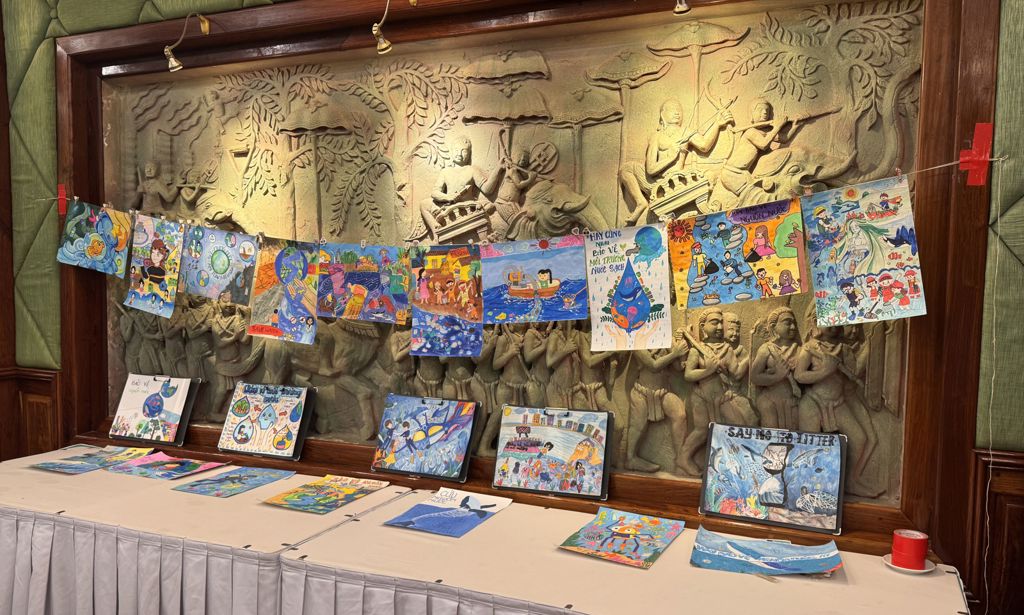
The ASM is held in connection with World Water Day 2026 (22 March), themed “Water and Gender Equality” under the slogan “Where water flows, equality grows.” This global observance highlights the importance of equitable access to water and sanitation as a foundation for reducing gender inequalities and achieving Sustainable Development Goals (SDG) 6 on clean water and sanitation and SDG 5 on gender equality.
A dedicated session will explore how the CMDA project is advancing gender considerations in groundwater management and will share early findings on gender wider social inclusion from household surveys conducted for the TDA. Additional discussions will cover partner initiatives in groundwater governance and transboundary coordination and cooperation agreements.
The meeting brought together stakeholders from both countries, including government and provincial agencies, research institutions, academia, international organisations, local NGOs, regional stakeholders, technical partners, and the media. The outcomes of the meeting are expected to contribute to gender and civil society considerations, while also strengthening transboundary coordination and cooperation agreements in the Cambodia–Mekong River Delta region.