CMDA RPMU Team Explores Groundwater and Ecotourism Solutions in Tra Vinh

As Chief Technical Advisor to the CMDA project, Bob Bower is deeply interested in learning about new initiatives based on direct, applied action engaged in efforts to address critical groundwater, community, and sustainable water use practices in the Transboundary Mekong Aquifers region. He recently had the privilege of participating in a field visit highlighting the incredible work being done on the ground.
From August 1–2, Bob joined a field visit led by Dr. Tran Thi Ngoc Bich of the SALT Lab at Tra Vinh University and CMDA Vietnam National Coordinator Le Viet Minh. The visit provided an opportunity to learn about the SALT Lab’s successful pilot projects, where they are collaborating with local farmers to tackle pressing water supply challenges.

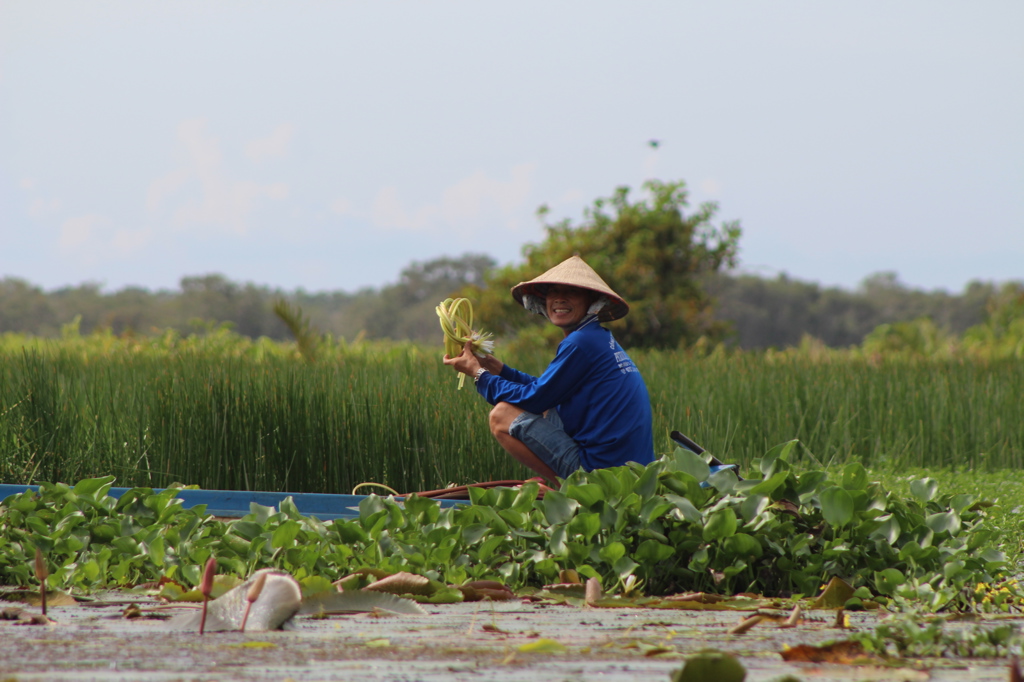
Applied water models being applied at Ecotourism farms near Tra Vinh, Viet Nam
On Hoa Minh Island, the CMDA RPMU team engaged with a local initiative that promotes on-farm ecotourism. This initiative includes 18 of the island’s 54 family farms, part of a five-year program focused on traditional farming, conservation, and biodiversity. It was inspiring to witness firsthand the innovative solutions being implemented, including farm water wells, rooftop harvesting systems, and additional water storage options like barrels and large synthetic bladders, which are essential for managing the drier seasons. The team also observed hydroponic cultivation systems on these ecotourism farms, showcasing a blend of tradition and innovation in farming practices.
Additionally, Bob inspected several large-scale sluice gates designed to manage tidal and seasonal saline intrusion—an essential component in safeguarding the region’s water resources.

One of the largest tidal saline sluice gates in the Tra Vinh area and historically the Delta.
One of the largest (historically) tidal sluice gates in the Tra Vinh area is working to protect against saline intrusion.
IUCN and the CMDA RPMU team deeply appreciate Dr. Tran Thi Ngoc Bich's leadership in facilitating this insightful visit. These experiences continue to reinforce the importance of collective work in promoting sustainable water management and community resilience in the Mekong Delta.
"The CMDA project is funded by the GEF, implemented by FAO, and executed by IUCN as lead partner, with UNESCO and MERFI as additional executing partners in collaboration with Viet Nam and Cambodia."
#IUCN #Groundwater #Sustainability #WaterManagement #Ecotourism #CMDAProject #SoutheastAsia #ISMAR12 #IAH #Hydrosoc