Turning dialogue into action for safeguarding the Cambodia–Mekong Delta aquifer
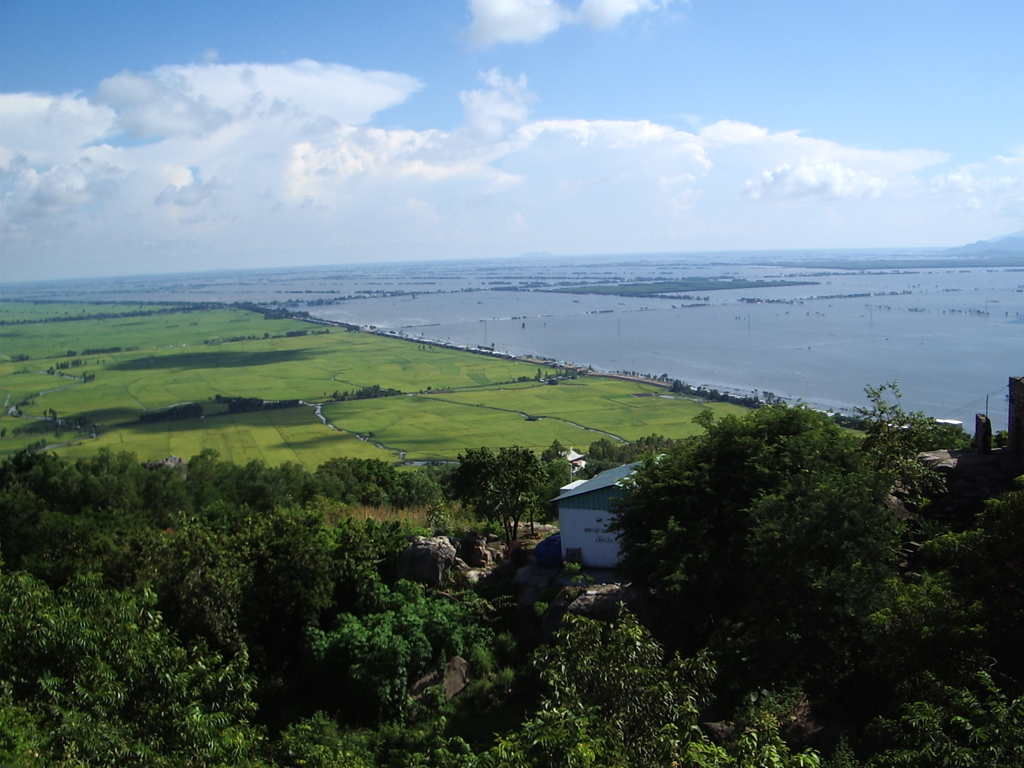
The Cambodia–Mekong Delta Aquifer (CMDA) is a major shared aquifer system that spans approximately 200,000 km² and supports an estimated 35 million people, providing water for households, agriculture, and industry. Beyond human use, it plays a critical role in sustaining wetlands, rivers, and groundwater-dependent ecosystems that underpin livelihoods throughout the region.
Yet this shared resource is under increasing pressure. Intensifying groundwater extraction, land-use changes, climate variability, salinity intrusion, and water quality challenges - including arsenic contamination - are placing growing strain on the aquifer.
In this context, strengthening transboundary cooperation is not only important - it is essential. Collaborative, science-based management will be key to safeguarding this vital resource for current and future generations.

Building a shared understanding of groundwater challenges
From 25–27 March 2026, representatives from Cambodia and Viet Nam gathered in Siem Reap to advance dialogue and technical cooperation under the Enhancing sustainability of the transboundary Cambodia–Mekong Delta Aquifer (CMDA) project.
CMDA is Southeast Asia's largest transboundary aquifer initiative under the Global Environment Facility (GEF) International Waters (IW) focal area, implemented by the Food and Agriculture Organization of the United Nations (FAO), in partnership with the Governments of Cambodia and Viet Nam that are represented respectively by General Department of Environmental Protection (GDEP), Cambodia Ministry of Environment (MOE), and Department of Water Resources Management (DWRM), Viet Nam Ministry of Agriculture and Environment (MAE). IUCN serves as the lead executing agency, with UNESCO and the Mekong Region Futures Institute (MERFI) co-executing partners.
The three-day gathering combined the First Annual Stocktaking Meeting (ASM), the Joint Inter-Ministerial Committee (IMC) Inception and First Visioning Workshop, and an FAO supervision mission field visit. It convened government representatives from GDEP of Cambodia MOE and DWRM of Viet Nam MAE, scientists, development partners, and civil society organisations to strengthen collaboration on sustainable groundwater management.
The First ASM provided a platform to review progress to date and to reinforce coordination among institutions engaged in groundwater governance and transboundary water cooperation.
Participants examined key challenges affecting the aquifer system, including rising water demand, climate change impacts on groundwater recharge, land subsidence linked to over-extraction, persistent data gaps, and the need for stronger coordination both across sectors and between countries.

during the Annual Stocktaking Meeting. Photo by IUCN Vietnam

during the Annual Stocktaking Meeting. Photo by IUCN Vietna
Developing a shared vision for the future of the aquifer
A Joint Inter-Ministerial Committee workshop introduced the visioning process which will support the development of the Strategic Action Programme (SAP), a key outcome of the CMDA project.
Participants explored possible future scenarios for groundwater conditions toward 2050, considering environmental, social and economic drivers of change. This process helps identify shared priorities and long-term objectives for sustainable groundwater management.
By fostering a common understanding, the visioning process contributes to shaping a shared long-term vision for the aquifer, guiding coordinated policy actions and investments to address transboundary groundwater challenges.
Dr. Andrew Wyatt, Deputy Head of IUCN Lower Mekong, emphasised that the CMDA initiative goes beyond a conventional groundwater project by examining the interconnections between groundwater, ecosystems, and communities. The initiative also integrates important social dimensions, including gender equality and inclusive participation, recognising that meaningful stakeholder engagement is essential for sustainable groundwater governance.
Knowledge generated through this process will feed into the Transboundary Diagnostic Analysis (TDA) and inform development of the Strategic Action Programme (SAP), supporting coordinated long-term management approaches between the two countries.

for groundwater sustainability. Photo by IUCN Vietnam

for groundwater sustainability. Photo by IUCN Vietnam
A field visit to Phnom Kulen National Park (NP) and the Siem Reap Water Supply Authority (SRWSA) provided an opportunity to connect policy discussions with practical groundwater management considerations.
Phnom Kulen NP serves as a critical groundwater recharge area, supporting water supply for Siem Reap and contributing to the health of the Tonle Sap ecosystem. During the visit, participants observed groundwater production and monitoring wells used to track changes in water levels and enhance understanding of the pressures affecting the aquifer system.
The visit also underscored the strong links between groundwater management, ecosystem conservation, and the protection of cultural heritage—particularly the Angkor temple complex, where groundwater has long played an important role in maintaining land stability.
Insights gained from the visit will help inform identification of pilot activities under the CMDA project. These may include approaches such as enhanced groundwater monitoring, managed aquifer recharge, conservation of groundwater-dependent ecosystems, and sustainable water use practices.

for the Siem Reap–Angkor aquifer. Photo by: IUCN Vietnam

on aquifer conditions and management challenges. Photo by IUCN Vietnam
Strengthening transboundary cooperation for long-term resilience
The three-day event marked an important CMDA project step in strengthening cooperation between Cambodia and Viet Nam on sustainable groundwater management. As the project progresses, transboundary collaboration and shared commitment will be strengthened, pilot projects for on-the-ground implementation will be identified, and the TDA and SAP will be finalised.